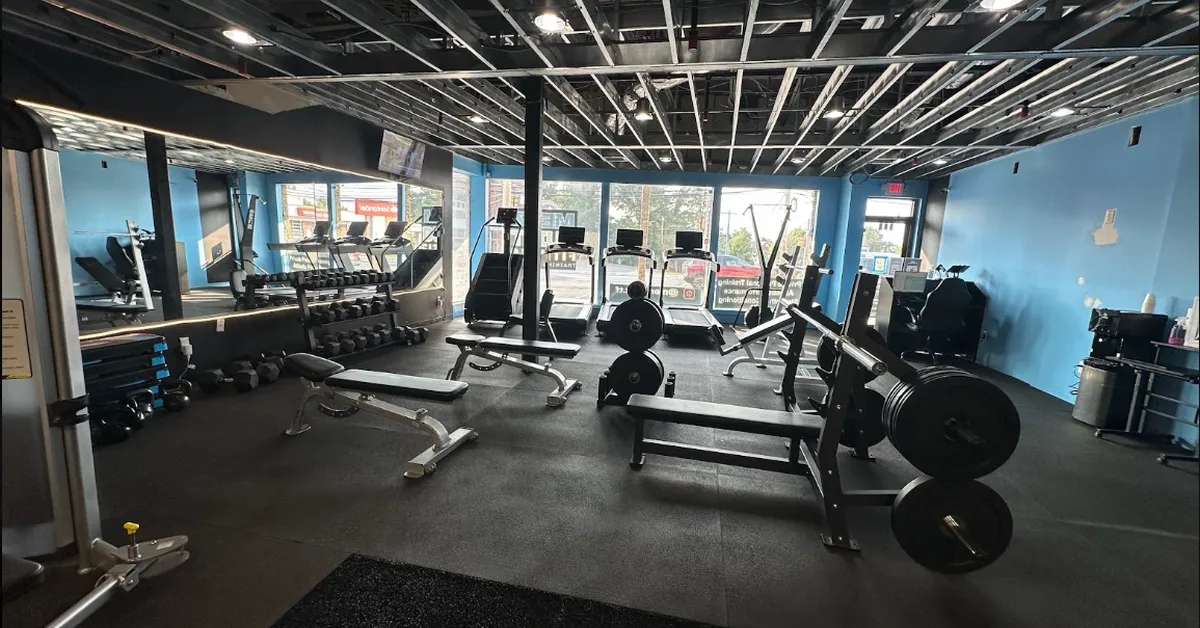
How a Gym in Linden, NJ Can Help You Lose Weight
Losing weight on your own usually works for a few weeks. Motivation is high, the plan feels simple, and then life gets in the way: a busy stretch at work, a missed week, a scale that won't move no matter what you cut out. If that cycle sounds familiar, the problem usually isn't willpower. It's structure. A good gym in Linden NJ can give you the two things most solo weight-loss attempts are missing: a plan built around your actual body and schedule, and someone paying close enough attention to catch you before you fall off completely. Before you write off another year of good intentions, it's worth understanding what actually makes the difference. Getting that part right tends to matter more than any specific workout or diet trend you could try instead.
Explore Personal Training
See how individualized coaching can help create a more structured approach around your goals, schedule, training experience, and progress.
View Personal Training →Finding a Gym in Linden NJ That Fits Your Weight Loss Goals
Not every gym is set up for the same kind of goal. Some are built around competitive lifting, some around high-energy group classes, and some are just rows of machines with nobody around to ask a question. If losing weight is the actual goal, what you need looks different: enough one-on-one attention that your plan gets built around your body, your schedule, and whatever old injuries or time constraints you're working with, instead of a generic template everyone gets handed at sign-up.
That starts with an honest conversation before anything else happens. How much weight are you trying to lose, and when is it realistic? What's worked or fallen apart for you before? Do you have joint issues, or a schedule that changes week to week? A gym that skips straight to a workout sheet on day one is guessing, and guessing is exactly why so many people spend months at a gym without much to show for it. If you want a sense of how much faster real coaching can move things along, this breaks down why personal training helps people reach their goals faster than training alone ever does. Scheduling matters here too. If a program only works when you can make it to a 6 a.m. session, it won't survive the first busy week at work, so it's worth asking upfront how flexible your training times can actually be.
What a Structured Plan Should Account For
Sustainable progress usually depends on more than simply showing up and doing random workouts.
Why One-on-One Coaching Speeds Up Weight Loss
Weight loss comes down to a fairly simple equation: burn more than you take in, consistently, for long enough that it adds up. The concept isn't usually where people get stuck. The execution is, whether that's training with form that eventually causes an injury, doing the wrong mix of exercise for the goal, or guessing at effort level every session because nobody's watching.
This is where working with someone who's actually paying attention pays off. One-on-one personal training means your exercise selection, intensity, and recovery get adjusted in real time instead of sitting static for months. If something bothers your knee, it gets changed that day instead of three weeks later when you finally mention it. Recovering faster than expected? The program gets harder before you plateau instead of sitting flat for another month. That kind of ongoing, small correction is hard to replicate on your own, and it's usually the real difference between people who hit their weight loss goals roughly on schedule and people who stall out for months without figuring out why. Tracking matters just as much as the workouts themselves. When someone's logging your numbers every week, a plateau gets caught and adjusted within days instead of months, which keeps the whole process from stalling out quietly in the background.
Explore Member Transformations
See real transformation stories and learn how consistent training, coaching, and accountability have supported members through their fitness journeys.
View Transformations →The Role of Coaching and Accountability
Anyone who has tried to lose weight solo knows the real enemy usually isn't one bad workout. It's the slow drift: skipping a session here, letting portions creep up there, telling yourself you'll restart Monday for the third month running. Programming is only part of a coach's job. Noticing that drift before it turns into three quiet months off is the other part, and it's the part most people can't really do for themselves.
That's the standard Merz Built Fitness is built around: coaches who know your name, track your numbers, and actually say something when you've missed a few sessions instead of letting you quietly disappear. Billy Merz Jr., an IFBB Pro who has coached clients through their own weight loss and body recomposition, brings that same level of attention to every program he builds, adjusting it as your body responds rather than running the same plan for six months regardless of how you're doing.
Explore Membership Options
Compare available membership options and find an access plan that works around your actual training schedule.
View Memberships →What Getting Started Actually Looks Like
If you're on the fence, the easiest starting point isn't a workout. It's a conversation. A short assessment of where you're at now, what's realistic for your timeline, and what a first month actually involves will tell you more than another hour of research on your own. You should also get a straight answer on cost and session frequency instead of vague pricing you can't pin down.
It helps to see what's actually possible before committing to anything. Members have used this same approach to lose real weight and keep it off, and you can look through some of those transformation stories directly instead of taking anyone's word for it. If it sounds like a fit, reaching out to set up a visit costs nothing and usually answers more than a dozen more searches. Comparing a gym in Linden NJ shouldn't feel complicated once you've had that first real conversation.
Weight loss goals are a lot easier to hit when someone else is watching the details you don't have the time or training to track yourself: your form, your recovery, the small dip in effort you don't notice happening. That's really the whole case for coaching over guessing alone. If you've stalled out more than once trying to do this by yourself, that's usually a sign to change the approach, not proof that you don't have the discipline for it.
Book a Consultation
Start with a conversation about your goals, schedule, experience, and what type of training approach may fit you best.
Book a Consultation →FAQs
1. How long does it take to see weight loss results at a gym in Linden NJ?
Most people notice better energy and looser-fitting clothes within three to four weeks of consistent training and a few nutrition adjustments. Visible physical changes usually show up around the eight to twelve week mark. Your actual timeline depends on your starting point and how consistent you are, so a coach can give you a more specific estimate once they know your numbers and goals.
2. Do I need to change my diet, or is training enough to lose weight?
Training alone can help, but for most people, nutrition plays a bigger role in actual weight loss. You don't need a complicated meal plan to start seeing progress, just some awareness of portions and overall intake. A good coach talks through this with you instead of handing you a workout plan and calling the job done.
3. Is one-on-one coaching worth it over working out alone or in a group class?
It depends on how much guidance you need and how things have gone for you on your own so far. If you've tried and stalled more than once, one-on-one coaching tends to close that gap faster because the plan adjusts to you specifically instead of averaging out for a room full of different goals. It also tends to lower injury risk since someone's watching your form directly.
4. What should I ask before starting a weight loss program at a gym?
Ask how your first plan gets built, how often it's adjusted, and what a typical week of training actually looks like. It's also worth asking how they handle setbacks like travel, illness, or a busy stretch at work, since those come up for almost everyone at some point during a weight loss journey.
5. How many days a week should I train to lose weight?
Most people see solid results training three to four days a week, mixing strength work with some cardio, though the right number depends on your starting fitness level and schedule. More isn't automatically better if it leads to burnout or injury. A coach can help you land on a frequency you can actually sustain, which matters more than hitting a perfect number early on.
6. Can I still lose weight if I have an old injury or a physical limitation?
In most cases, yes. A program can be built around a limitation instead of ignoring it, whether that means swapping certain exercises, adjusting range of motion, or leaning more on other movement patterns. It's worth mentioning any injury history up front so your coach can plan around it from day one instead of finding out mid-session.
