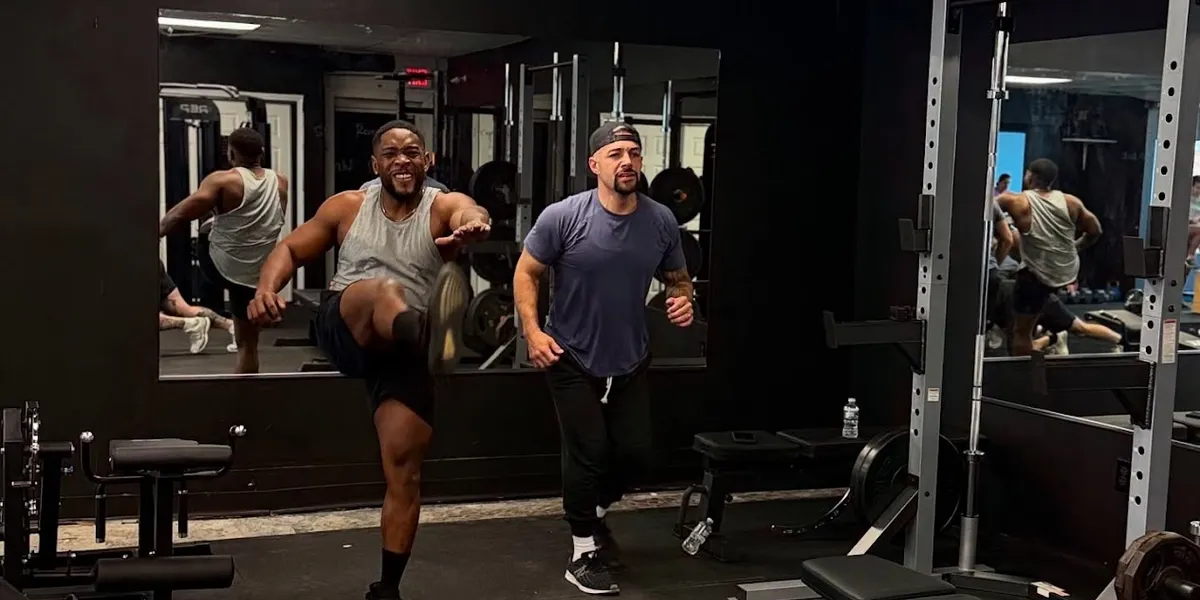
How Can a Personal Trainer Improve Your Workout Technique?
You can go to the gym five days a week for a year and still be moving the same way you did on day one. Reps go up, weights go up, but the actual pattern underneath never gets corrected. It just gets loaded with more weight on top of it. That's usually the point where people start wondering whether a personal trainer would actually fix something, or if it's just a more expensive way to do the same workout with someone watching. Maybe it shows up as a shoulder that aches by Thursday, or a bench press number that hasn't moved in months no matter how hard you push. Neither one feels like a technique problem at the moment, but that's usually exactly what it is. The honest answer is that technique is exactly where a trainer earns their keep. It's the one flaw you often can't see for yourself, and it's usually the one doing the most damage over time.
What Bad Technique Actually Looks Like
"Bad technique" sounds like something obvious, a rounded back on a deadlift or knees caving on a squat. Most of it isn't that dramatic. It's smaller: a knee drifting a few degrees, a shoulder picking up work it shouldn't be doing, a rep that looks fine from the front but tells a different story from the side. A hip that shifts slightly to one side on a lunge, or elbows that flare out a little more each set as fatigue sets in, both fall into this same category. None of it hurts right away, which is exactly why it sticks around long enough to become a habit instead of getting fixed early.
The Difference Between Uncomfortable and Unsafe
New lifters especially struggle to tell these apart. Muscle burn from a hard set feels uncomfortable and is completely normal. A joint compensating for a muscle that isn't doing its job feels similar at the moment, but it's building toward an injury instead of a result. Without a reference point, both just feel like "working hard," and that's exactly the gap a coach is trained to catch. A trainer who's watched thousands of reps can usually spot that difference within the first two or three reps of a set, long before it turns into something that actually hurts.
Why You Can't Feel It Happening Yourself
This isn't a discipline problem. Your body genuinely can't tell you when a movement pattern is off, because the compensation usually feels like the path of least resistance. You default to whatever joint or muscle is strongest, not necessarily the one that's supposed to be doing the work. A movement assessment during your first session exists specifically to catch that gap between what a lift feels like and what it actually looks like from the outside.
How a Personal Trainer Actually Spots and Fixes Form Issues
Spotting a technique flaw takes more than watching someone lift once. It takes knowing what that person's lift should look like given their build, their mobility, and their training history, then noticing the specific point where reality drifts from that. This is a big part of what one-on-one personal training is actually paying for: eyes on your specific movement, not a generic checklist applied to everyone in the room.
Real-Time Cues Beat After-the-Fact Corrections
A cue given mid-set, something like "drive through your heels" or "keep your ribs down," changes the rep while it's happening. A correction given after the fact, once the set is over and the habit already fired, has to be relearned instead of just adjusted. Think of it like the difference between a coach fixing your grip as you set up for a lift versus watching a video of yourself a week later and wondering what happened. That timing difference is most of what separates a trainer from a workout plan written on a piece of paper.
Building the Pattern Before Adding the Weight
Good coaching usually slows things down before it speeds them up. If your squat pattern isn't right at bodyweight, adding a barbell just makes the same flaw harder to fix later, not easier to ignore. A trainer worth the money will hold back on load until the movement itself is solid, even when that feels like it's taking longer than it should. It can feel slow at the moment, especially when you're eager to see bigger numbers on the bar, but that patience is usually what prevents a six-month setback later.
Why Tempo Comes Before Load
Slowing a rep down removes the momentum that lets bad form hide. A controlled three-second descent exposes a wobbling knee or a shifting hip that a fast rep would have covered up completely. That's why tempo work shows up so often early in a program. It's not about the weight yet. It's about proving the pattern holds up before anything gets added on top of it.
What Changes Once Your Workout Technique Is Actually Dialed In
The obvious benefit is fewer injuries, but that undersells what's actually happening. When your workout technique stops leaking energy into the wrong joints and muscles, the lift itself gets more efficient, and efficient lifts are the ones that actually build strength instead of just building fatigue. It lines up with what one-on-one coaching actually changes beyond just having someone count your reps for you.
Strength You Can Actually Use Outside the Gym
A squat with clean mechanics transfers to picking up a kid, moving furniture, or climbing a ladder without your knee complaining about it later. A squat held together by compensation mostly just gets you better at that one specific compensation. It's a distinction that matters more as people get older, when day-to-day movement quality starts to count for just as much as anything happening under a barbell. Technique is the difference between strength that carries over into daily life and strength that only exists under very specific, controlled conditions.
Fewer Setbacks, More Consistent Weeks
Most training plateaus aren't caused by bad programming. They're caused by an old compensation finally catching up, usually as a nagging joint issue that forces a week or two off right when momentum was building. Fixing the pattern early means fewer of those forced pauses, which matters more for long-term progress than almost any single workout decision you'll make.
Who's Actually Coaching You Matters
Not every trainer watches for the same things, and not every gym gives a coach enough time with you to notice the small stuff before it becomes a real problem. At a crowded commercial gym, a trainer might be splitting attention across a dozen people in an hour, which leaves little room for the kind of correction that actually changes a movement pattern. Ask around and you'll hear the same story from a lot of people: they trained somewhere for years and never once had anyone actually correct how they moved.
What to Ask Before You Commit
It's fair to ask directly how hands-on the coaching actually is. Does your trainer watch every set, or mostly check in between them? Do they explain what they're correcting and why, or just call out a cue without context? A coach who can answer that clearly, rather than vaguely, is usually one who's actually paying attention rather than running the same session for everyone. Merz Built Fitness was built around that kind of close attention specifically, with founder Billy Merz Jr., an IFBB Pro certified trainer, working with clients directly instead of managing them from across a crowded floor.
Getting Started: What a Technique-Focused First Session Looks Like
If your main goal right now is fixing how you move rather than just adding weight to the bar, say that upfront. It changes how the first few sessions get built. Instead of testing your limits on day one, a good coach spends that time watching how you actually move, figuring out which patterns need work before anything gets loaded up.
That conversation is worth having even if you're not sure your technique is actually a problem. Plenty of people training for years still find out their form was quietly working against them the whole time. The only way to know for sure is to have someone qualified actually look. Reaching out to ask a few questions before committing to anything costs you nothing and usually clears up more than another month of guessing would.
Fixing your workout technique isn't about becoming a perfectionist over every rep. It's about making sure the effort you're already putting in is actually going somewhere instead of quietly working against you. That's a fixable problem, and it's usually a faster fix than people expect once someone qualified is actually watching. The sooner it gets looked at, the less time gets spent building strength on top of a pattern that was never quite right to begin with.
